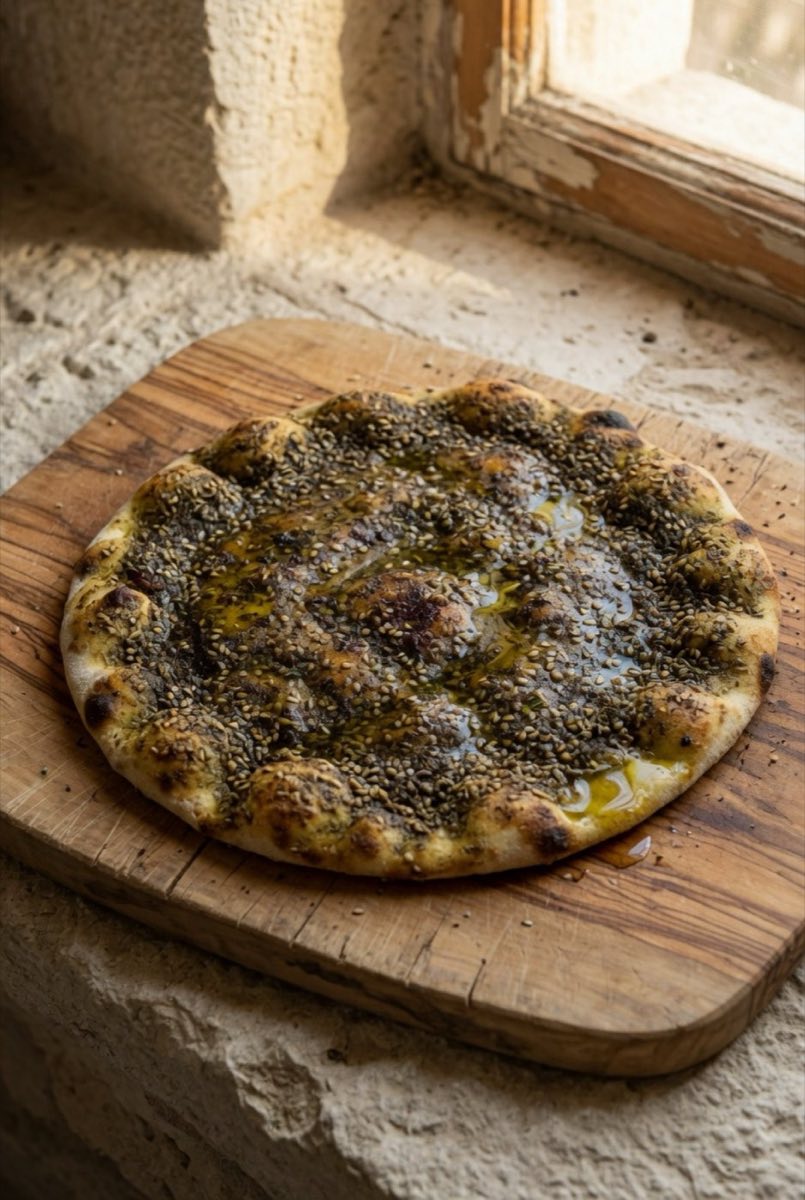
Manakish Za'atar — Pãezinhos macios cobertos com uma pasta perfumada de zaatar e azeite, assados até dourar, o pão de café da
مناقيش زعتر

Manakish Za'atar

Bekaa Valley · Levantine
✓ Tested in Faten's kitchen

Pãezinhos macios cobertos com uma pasta perfumada de zaatar e azeite, assados até dourar, o pão de café da manhã queridíssimo do Vale do Bekaa.

⏱ 105 min🍽 6 servings📍 Bekaa Valley

Cook this hands-free

Every Sofra recipe is free to read here on the web. In the app, 85 recipes are free to cook in full, and membership opens the rest. The optional supporter upgrade unlocks the audio experience — step-by-step English narration (text-to-speech) — plus hands-free Cooking Mode and Charbel Rouhana's original oud music.

Get Sofra on Google Play →
Free download. Zero third-party ads. Ever.

Ingredients

Method

  1. Numa tigela grande, misture a farinha, o fermento, o açúcar e o sal. Faça um buraco no centro.
  2. Despeje a água morna e o azeite. Misture até formar uma massa irregular.
  3. Passe a massa para uma superfície enfarinhada e sove por 8 a 10 minutos, até ficar lisa e elástica.
  4. Coloque numa tigela untada com azeite, cubra com um pano úmido e deixe descansar em local morno por 1 hora, até dobrar de volume.
  5. Pré-aqueça o forno a 230°C, com uma pedra refratária ou uma assadeira pesada já dentro.
  6. Numa tigelinha, misture o zaatar com o azeite até virar uma pasta espessa e espalhável.
  7. Divida a massa em 6 bolinhas iguais. Abra cada uma com o rolo num disco fino, de uns 20 cm.
  8. Espalhe uma colher de sopa generosa da pasta de zaatar sobre cada disco, deixando uma borda pequena.
  9. Asse por 8 a 10 minutos, até a borda dourar e o cheiro tomar conta da cozinha.
  10. Sirva quente, dobrado ao meio ou enrolado, com tomate, pepino e hortelã frescos dentro.

The story

O manakish é o equivalente libanês da pizza, e o de zaatar é a versão mais querida. No Vale do Bekaa, onde o tomilho-selvagem cresce solto pelas encostas, as famílias preparam manakish todo dia de manhã sobre o saj, uma chapa convexa parecida com uma cúpula invertida. O cheiro do zaatar tostando no azeite é o cheiro de uma manhã libanesa, do mesmo jeito que pão na padaria é o cheiro de uma manhã brasileira. Para a diáspora, é a memória mais imediata da casa da avó: comer manakish enrolado, ainda quente, com tomate e pepino fatiados ao lado.

Frequently asked questions

What is Manakish Za'atar?

Soft flatbreads topped with a fragrant za'atar and olive oil paste, baked until golden — the beloved breakfast bread of the Bekaa Valley.

Where is Manakish Za'atar from?

Manakish Za'atar comes from Bekaa Valley. Sofra documents this recipe as part of its 214-recipe Lebanese and Syrian heritage collection, including 49 dishes from Idlib province.

Is Manakish Za'atar vegetarian or vegan?

As written, Manakish Za'atar uses only plant-based ingredients, so it is suitable for both vegetarian and vegan diets. Always double-check the full ingredient list against your own dietary needs.

What can I use instead of za'atar spice blend in Manakish Za'atar?

The za'atar spice blend called for here is part of the traditional recipe and gives Manakish Za'atar its traditional character, so keep it if you can. If you must substitute, choose the closest equivalent you have on hand and adjust to taste — the dish will shift slightly from the traditional version but still work. The Sofra app lists the full ingredient set and sourcing notes.

What do I serve with Manakish Za'atar?

In a Levantine breads spread, Manakish Za'atar is served warm — with dips like hummus, labneh, or za'atar and olive oil, or alongside any main dish.

Can I make Manakish Za'atar ahead, and how do I store leftovers?

Breads are best fresh and warm. If you make this ahead, let it cool completely, store it in an airtight bag or container, and gently rewarm before serving. Many flatbreads also freeze well.

Hear every step read aloud

Step-by-step audio narration (text-to-speech) guides you hands-free. Charbel Rouhana's original oud plays during Cooking Mode.

Get Sofra on Google Play →